
You can’t learn everything there is to know about how to electrify your fleet from a book or a website. But you can learn it from fleet managers who have gone through the process—and the partners who helped them.
We regularly speak to fleet operators in Singapore about their electrification objectives, their concerns, and how they overcome challenges. So we’ve come up with a helpful guide to keep you on track with YOUR electrification after the recent Singapore Green Plan 2030.
Yes, many fleet owners are feeling “stuck in the middle” hearing about the No Diesel mandate and the stricter regulations on emissions. But keep reading as we show you just how easy it can be to electrify your fleet.
Steps to consider before and during a fleet’s transition to EVs include consulting with stakeholders, presenting them with recent & relevant vehicle data, and creating a plan to train drivers. These are steps to take before implementation, but should continue as the plan is being put into action.
For stakeholders to get onboard with EV migration, they’ll want to be presented with a solid plan that includes a goal date for starting and completing the transition. This will require comprehensive data on your current vehicles together with their Cost of Ownership numbers.
This telematics data should also span over a period of at least 1 year so that it includes seasonal fluctuations like monsoon season and traffic trends. However, a longer span of data is even better. Pull reports from your fleet telematics software to ensure accuracy of this information and present it to your stakeholders to kickstart the EV migration process.
Your EV transition action plan should be furnished with a future projection of EV Costs of Ownership as well as how the LTA incentive scheme will apply to your company post migration.
Bear in mind that the EEAI rebate will be over at the end of 2026, so make sure to include this deadline in your action plan to create urgency in the decision-making process of your stakeholders.
Avoid leaving driver training with EVs until you’ve purchased your first one. Make sure they’re EV-ready by the time you begin transitioning. Training should include EV charging procedures, range protocols, and how dispatchers should rethink sending drivers out. Base your training on solid telematics data derived from fleet software that accommodates EV fleets or even mixed fleets.
It’s wise to migrate your fleet to electric in smaller phases rather than all at once. Start by piloting & testing the process in a compartmentalised setting to learn the ins and outs. Then slowly transition the change to other vehicles before completely transforming your entire operation.
Choose a small number of vehicles (preferably ones that are redundant or close to redundant based on your telematics readings) and replace them with EVs. Measure them closely to gauge duty cycles and projected ROI using Cartrack’s AI-powered fleet software.
EV migration tip: Speak to Cartrack about arranging a live demo for some of your vehicles to see how our software solves common challenges.
Now start moving through your other vehicles and even consider a charger installation if your fleet is large enough to warrant one. Continue to monitor and collect data so you can report to your stakeholders about a plan for full migration.
With all the data you’ve collected, make the move to transition all your vehicles to EVs. By this time you’ll have a fuller view of the risks, challenges, and benefits of doing so.
Being ready to migrate your fleet to EVs means auditing the duty cycles and TOCs (total cost of ownership) for each vehicle. Duty cycles measure what each vehicle does every day, while TOC tells you if vehicles are providing a return on your investment (ROI).
The only way to accurately measure what a vehicle does every day is through a telematics system. This data will relate to kilometres travelled & fuel used, and can even include diagnostics for the vehicle. With this information you can audit the duty cycle and compare it with your other vehicles.
How does this help? It tells you which vehicles are most essential to your operations, and paves the way for your decision to replace or keep during your EV migration process.
The TOC of each vehicle takes the cost of purchase, maintenance costs, insurance, registration, and fuel into consideration. It compares these costs with how much profit the vehicle helped to generate so you can calculate your ROI (for each vehicle individually and combined as one fleet).
How does this help? It shows you which vehicles are worth keeping and which are actually costing you more than their overall value. This allows you to ‘right-size’ your fleet and focus on productivity rather than convenience.
To choose the right EVs for your fleet, start by familiarising yourself with the various options out there. Each vehicle will have its own unique value offering in terms of EV range, pay load, resell value and maintenance needs. Once you know what a vehicle can do, you’ll be able to choose the best one for your operations.
Arval published a study done in the UK where the relation between weight, payload and distance was measured. The study found that an EV battery can be drained 76% more quickly when carrying a full payload and towing 500kg.
This highlights the importance of collecting data that’s relevant to your fleet and comparing it with what an EV lorry or truck can handle. The routes your vehicles travel also tie into this decision, so a telematics system is invaluable in choosing the best electric vehicle.
The 8- to 10-year mark for an EV is where you’ll spend on a new battery. This cost is significant, but it’s also offset against the costs you saved until then (on maintenance and fuel). Monitoring battery health and managing day-to-day fleet costs for that vehicle must be carried out to ensure you aren’t caught by surprise 8 years down the line.
EVs require less maintenance (no oil changes, less wear on brakes, and no spark plugs), which will save you. You’ll also spend much less on charging than you would on fuel. These are good savings to have, but manage them well in preparation for the day when your battery will need a replacement.

Do you know the differences between depot charging, public charging and grid power? Do you have a plan to implement one or a combination of some? Here’s a quick table to help you understand the upfront cost, the ongoing costs, and the convenience of all three:
According to SingStat, 77.2% of the country's population reside in a Housing & Development Board (HDB) flat, and don't have access to a car garage where they can install a private EV charging setup. For this reason, public charging is super important.
Fortunately, Singapore's government is planning on meeting the need. In line with the 2030 Green Plan, their goal is set for 60,000 charging stations by the year 2030. This is worth noting for fleet operators, because their operations will depend on these EV charging stations to maintain mobility.
According to Singapore's Future Grid Capabilities Roadmap, electricity usage is set to increase by a minimum of 3.7% every year. How does the Singapore government intend to manage this increased pressure on the grid?
You might be surprised to learn that building more power stations isn’t their main strategy. While new power station construction is already underway, they’ll also be creating smaller VPPs across the country. These power-generating setups will rely on solar panels and advanced battery storage to accommodate the higher usage.
The plan is intricate but smart. If all goes well, Singapore will have thousands of energy-producing Virtual Power Points spread across the island!
The thing that’s probably at the forefront of your mind is how you’re going to pay the high upfront costs for new electric vehicles. Fortunately there are financing incentives and rewards for migrating your fleet to EV in Singapore—even if you opt for a mixed fleet strategy at first.
There are four important financial incentives you should be aware of if you’re a fleet operator starting the electrification process. These include the:
The CVES incentive rebates your EV van or EV light goods vehicle by up to S$20,000. Also note that there’s a possible surcharge of up to S$15,000 if you purchase a pollutive diesel vehicle of the same class.
The HVZES provides targeted cash incentives for commercial vehicles with a Maximum Laden Weight (MLW) over 3,500kg, structured into two weight categories:
• Heavy Vehicles (3,501 kg – 7,000 kg MLW): Eligible for a S15,000incentive,disbursedinthreeS5,000 annual tranches.
• Extra-Heavy Vehicles (>7,000 kg MLW): Retains the full S$40,000 incentive, disbursed in three tranches across two years.
The EHVCG co-funds 50% of charger installation costs, capped at S$30,000 per charger. The grant applies to high-powered chargers (rated at 50kW or above) deployed for new electric heavy vehicles, subject to a cap of three co-funded chargers per business site across a nationwide limit of the first 500 eligible installations.
The EEAI incentive is offered in hopes of encouraging light passenger vehicle fleet operators to make these changes NOW. It offers a 45% rebate on the Additional Registration Fee (ARF) for these cars, but the incentive is capped at $7,500.
Fleets in Singapore are migrating to EVs because of objectives set out in the Singapore Green Plan 2030. For many companies who’ve been thinking about transitioning to electric vehicles, this plan was the push they needed to act now. But your strategy to migrate to EVs needs to be tempered with educated decision making.
Selling all your petrol & diesel vehicles now and buying a whole new electric fleet isn’t the way to go. This transition calls for a data-driven selection process. After all, you have a few years to make sure you do it properly.
Singapore’s 2030 Green Plan influences the way Singapore companies will purchase their vehicles going forward by placing specific mandates on new vehicle registrations. What’s the mandate?
All new vehicle registrations must be cleaner energy models. The deadline? 2030!
Diesel vehicles are being phased out entirely, which is a big deal for larger long-haul fleets. Because of these mandates, buying a new vehicle that ISN’T considered a ‘cleaner energy’ model, seems rather pointless. These vehicles won’t do well on the resale market, nor will there be a big demand for used ones.
There’ll be substantial financial penalties for fleets that are deemed ‘pollutive’. More importantly, there’ll be coveted rewards for companies who adopt EV vehicles to their fleets. Because fleet technology is now able to measure emission outputs more accurately, these incentives will be easy to determine for businesses who opt for mixed fleets.
This same Green Plan has a forward-thinking 2040 goal: ALL fleet vehicles must be fully electric by 2040. This includes any commercial fleets in the country and includes public transport operations.
It’s clear that right now in Singapore, it’s financially more viable to invest in electric vehicles. But this investment goes further, because charging infrastructure must evolve to accommodate this amount of change.
Another investment factor is the necessity for fleet technology to provide data for the ‘unknown’ landscape of EV migration. This is new territory for many fleet operators, so navigating it blindly is unadvisable. Why?
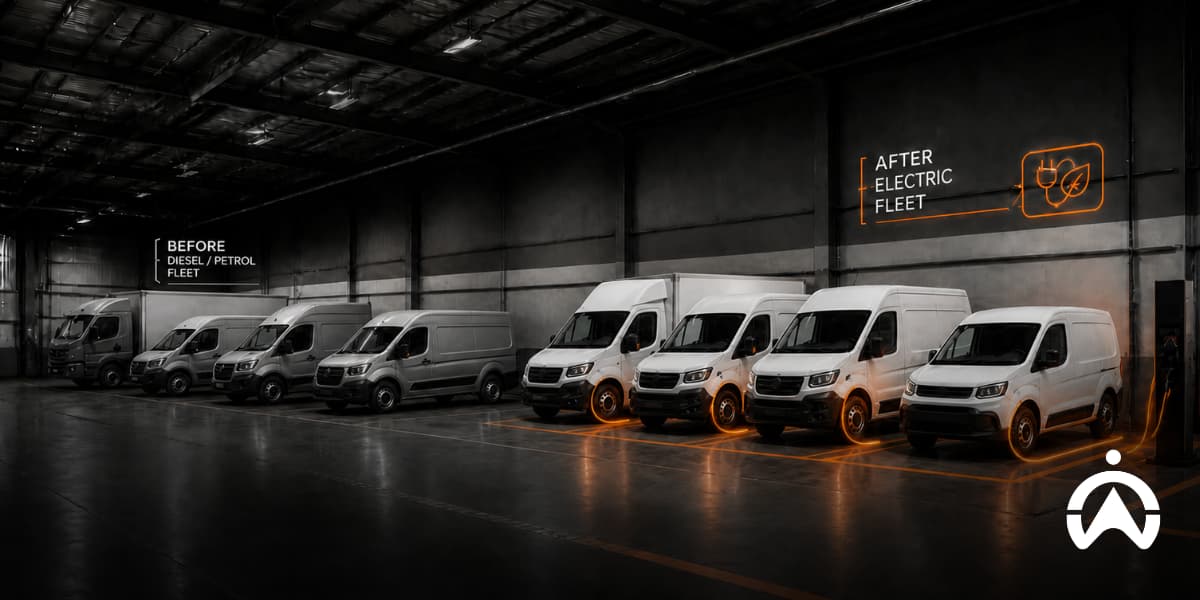
Walking through full EV migration is something not many have done. Those who have done so successfully weren’t afraid to ask for help. Cartrack has partnered with companies across 23 countries to give them the data they needed to make the right decisions at the right time during their EV transformations.
We continue to help them thrive through EV performance tracking, range anxiety alleviation, EV driver coaching, and EV maintenance management. Here’s how.
Once you electrify your fleet, you’ll want to exercise the same level of care that you did when you managed ICE vehicles. Data is necessary for the transition itself, but it’s also needed once that transition is over.
Read on to know why you should continue to track EV performance.
With data and training, you can give your driver team more confidence in its range while using an EV. Real-time battery monitoring and route optimisation that's relevant to charging stations will keep them moving and eliminate the worry of being stranded with a flat battery.
How an EV is driven affects its battery health, range, and longevity. With Cartrack’s driver coaching software, you’ll get an ROI on every vehicle by teaching your team how to drive them optimally. Combining vehicle camera & dashcam technology, CAN bus integration, and coaching software, you can solidify the following habits:
Choosing the right partner is the secret to pulling off EV migration successfully. We’re here to walk you through it. Speak to one of our expert consultants about what your fleet needs to transition to electric vehicles in a measured way.
The 80/20 rule for EV charging says that you should never exceed charging your EV battery past 80% or allow it to go lower than 20%. This is one of the best ways to preserve the batter for longer and still get a decent range on each charge.
As of September 2026, Singapore reported having more than 34,700 EV charging stations across the country. This means that according to the Singapore Green Plan 2030, they’re already past the halfway mark for achieving the 60,000 they eventually plan to have.
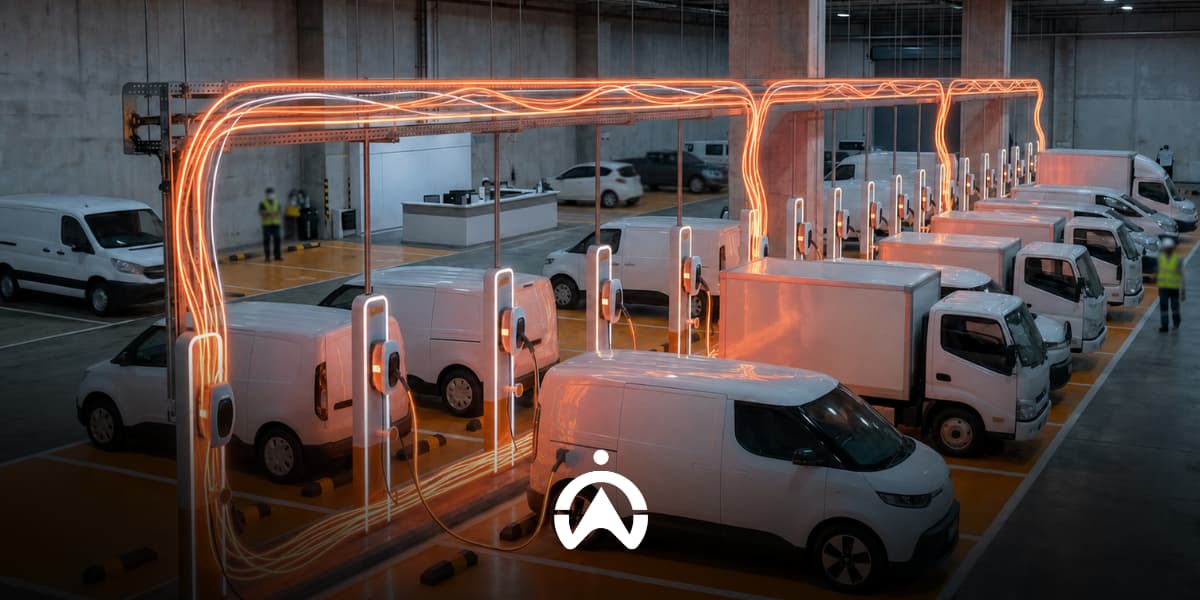
Learn about every individual step toward successful EV fleet migration and let Cartrack walk you through the process from start to finish.
